A software antipattern: Software Entanglement
Let's assume the following:
Service A assembles boxes of chocolates and boxes of candy. Chocolates have 12 pieces in the box, candy have 10.
Service B labels the box. To do so, it looks at how many pieces are in the box, if it's 12 the label is chocolate, if it's 10 the label is candy.
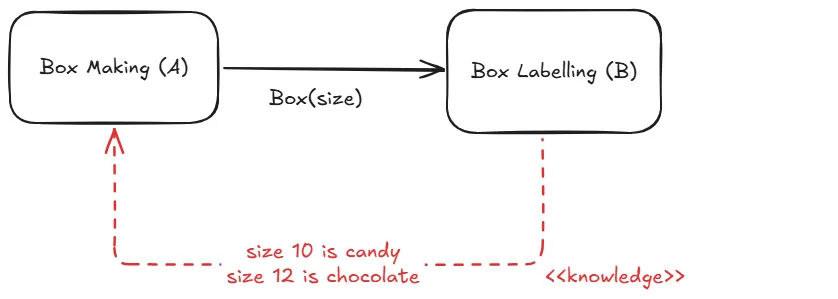
The software works, but it creates an entanglement between the two services. Service B knows that Service A only makes chocolates of 12 pieces, and candy of 10 pieces. Nothing else.
Of course this is true today — but may change in the future. When Service A changes it's behavior, so must service B. If it makes chocolates in 10 pieces, Service B must be updated. If it makes boxes of a different size, service B must be updated.
However this entanglement isn't written in code. It leaves in an implicit side channel — Knowledge. There is nothing a coding agent can read to know this connection and nothing a reviewer can review.
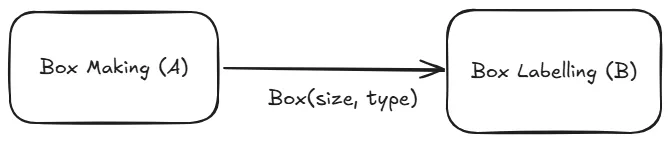
This is very dangerous. A breaking change is easily missed. Entanglements must be avoided. Instead of assuming that 10 pieces will be candy, the Service A should pass explicitly the type of candy of the box to Service B.